

CSX Lawsuit Settlements
A Csx lawsuit settlement can be the result of negotiations between the plaintiff and the employer. These agreements usually provide the payment of damages or injuries caused by the company's actions.
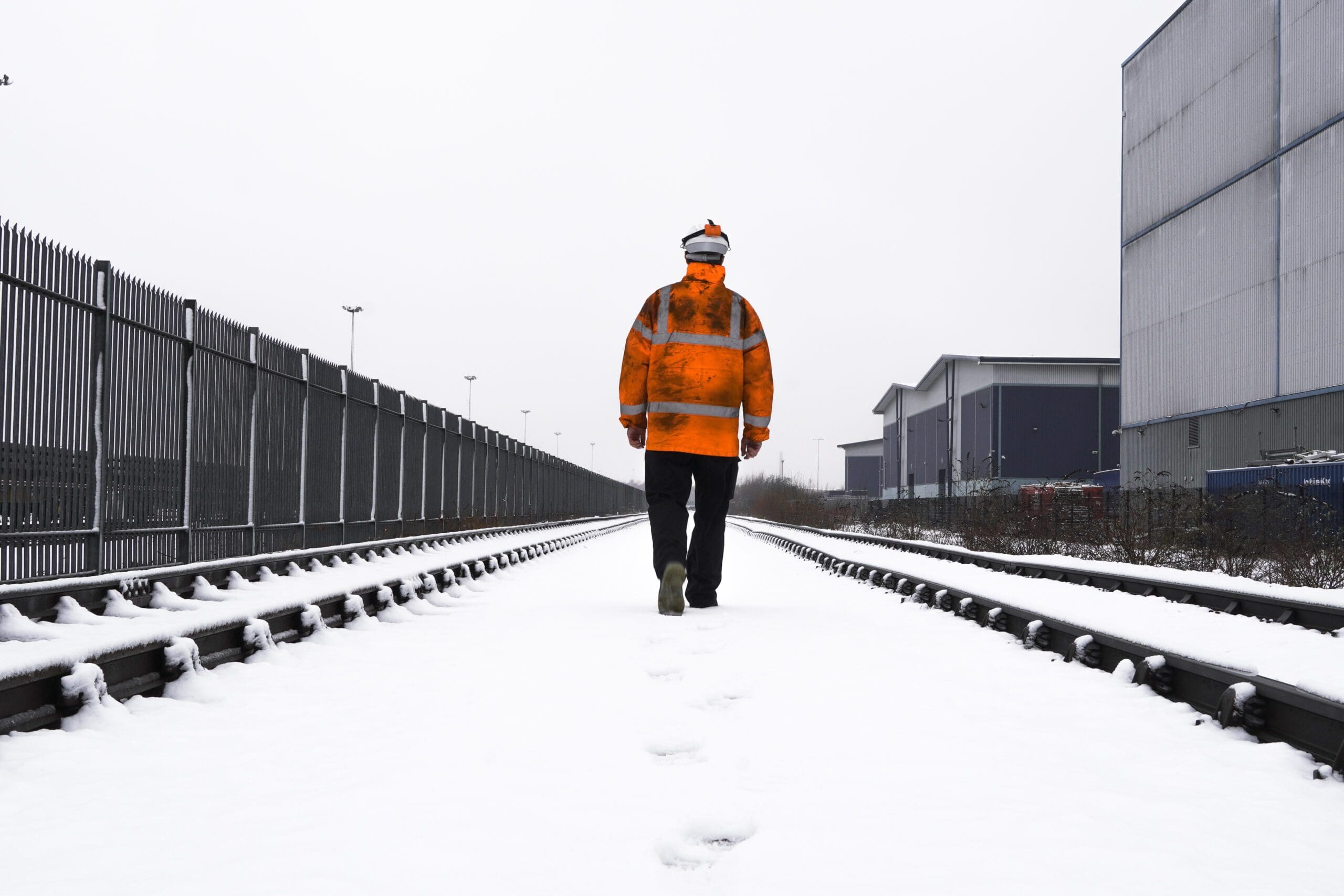
If you are a victim of a claim, it is important to speak with an experienced personal injury attorney regarding the options available to you for relief. These types of cases are the most frequent, therefore it is crucial that you locate an attorney who can aid you.
1. Damages
You could be eligible for compensation if victimized by the negligence of Csx. A settlement agreement for a csx lawsuit can help your family and you to recuperate a portion or all of your losses. An experienced personal injury lawyer can assist you get the compensation you are entitled to, regardless of whether you're seeking compensation for physical or mental injury.
A csx lawsuit can cause significant damages. A recent decision in favor of $2.5 billion in punitive damage in a case involving the train crash which claimed the lives of several New Orleans residents is an example. CSX Transportation has been ordered to pay the amount in accordance with an agreement to settle all of its claims against a class of plaintiffs against the company over injuries resulting from the incident.
Another example of a huge award in a CSX lawsuit is the recent verdict of a jury to award $11.2million in wrongful death damages for the family of a Florida woman who died in the crash of a train. Csx Lawsuit Settlements found CSX 35% liable.
Railroad Cancer Lawsuit Settlements was a major decision due to a variety reasons. The jury concluded that CSX did not comply with the state and federal regulations, and also that it failed to effectively supervise its employees.
The jury also determined that the company was in violation of environmental pollution laws in both federal and state courts. They also ruled that CSX did not provide adequate training to its employees and that the company recklessly operated the railroad in a dangerous way.
The jury also awarded damages for pain, suffering and other losses. The damages were based on the plaintiff's emotional and mental stress as a consequence of the accident.
The jury also found CSX negligent in handling the accident and ordered it pay $2.5 billion in punitive damage. Despite the verdict, CSX appealed the decision and plans on continuing to appeal to the United States Supreme Court. The company will not back down and will continue to strive to prevent future incidents or ensure that its employees are protected against any injuries caused by its negligence.
2. Attorney's fees
Attorney fees are an important consideration in any legal case. However, there are ways that lawyers can save you money without sacrificing the quality of your representation.
The most obvious and most popular method is to work on the basis of a contingency. This allows attorneys to manage cases more efficiently and lowers the cost for all parties. It also ensures that the most competent lawyers are working for you.
It is not uncommon to see a contingency fee in the form of a percentage of your recovery. Typically, this figure is within the 30-40 percent range, though it could be higher depending on the circumstances.
There are a variety of contingency fee plans Some of them are more popular than other. A law firm representing you in a car accident case may receive a payment in advance.
It is likely that you will be required to pay a lump sum if your lawyer decides to settle your Csx case. There are many factors that can affect the amount you receive in settlement. This includes your legal history, the amount your damages, and your capacity to negotiate an equitable settlement. Also, you must consider your budget. You may want to save funds for legal costs if you are a high net-worth person. In addition, you need to ensure that your attorney is well-informed on the ins and outs of negotiating a settlement , so that they are not wasting your money.
3. Settlement Date
The CSX settlement date associated with the class action lawsuit is an important aspect in determining whether not a plaintiff's claim will be successful. This is because it determines the time at which the settlement is approved by the federal and state courts, as well as when class members may object to the agreement or claim damages under the conditions.
The statute of limitations for claims under state law is two years from the date of the injury. This is known as the "injury discovery rule." The person who has suffered the injury must file a claim within two years after the incident or the case will be deemed to be time-barred.
However the RICO conspiracy claim is governed by a uniform four-year statute of limitations found in 18 U.S.C. SS 1962(d). To establish that Railroad Cancer Lawsuit Settlements has been denied by the court, the plaintiff must demonstrate a pattern or racketeering or racketeering.
Thus, the statute of limitations analysis is applicable to the second count (civil RICO conspiracy). Nine of the lawsuits CSX relied on to prove its state claims were filed more than two years before CSX filed its amended case in this case. Therefore, CSX cannot rely on these suits.
A plaintiff must demonstrate that the racketeering that prompted the RICO conspiracy claim was part of a scheme or interference with legitimate business interests. A plaintiff must also show that the actual act of racketeering had a significant impact on the public.
CSX's RICO conspiracy case is a failure for this reason. This Court has decided that a civil RICO conspiracy claim must be substantiated not only by one racketeering incident, but the pattern. CSX was not able to satisfy this requirement and the Court finds that CSX's Count 2, (civil RICO conspiracies) is not admissible under the "catch all" statute of limitations in West Virginia Code SS 555-2-12.
The settlement also requires CSX to pay a penalty of $15,000 to MDE and to finance the community-led energy-efficient renovation of an abandoned building in Curtis Bay for use as an environmental education research and training center. CSX also must make certain improvements at its Baltimore facility to increase safety and prevent future accidents. CSX must also pay a check of $100,000 for Curtis Bay to a local non-profit.
4. Representation
We represent CSX Transportation in a consolidated group of class actions brought by consumers of railroad freight transportation services. Plaintiffs assert that CSX along with three other major U.S. freight railways conspired to fix the prices of fuel surcharges in violation of Section 1 of the Sherman Act.
The lawsuit claimed that CSX violated federal and state law by participating in a scheme to systematically fix fuel surcharge prices, and also by knowing and deliberately defrauding consumers of its freight transportation services. The plaintiffs also claimed that CSX's price fixing scheme caused them harm and damages.
CSX requested dismissal of the suit, arguing the plaintiffs' claims are time-barred under the rule of accrual for injury. Specifically, the company contended that plaintiffs weren't entitled to recover the amount they incurred if she would have been able to reasonably discover her injuries prior to when the statute of limitations started to expire. The court denied CSX's motion and held that the plaintiffs had shown sufficient evidence to support the claim that they should have discovered her injuries prior to the statute of limitations expiring.
On appeal, CSX raised several issues that included:
It was arguing that the judge rejected its Noerr–Pennington defense. This required it to not present any new evidence. The court reviewed the verdict and found that CSX's argument as well as the questioning about whether a B reading was a diagnosis or not of asbestosis, and whether a formal diagnosis was made, confused the jury and led to prejudice.
It also argues that the judge's decision was wrong in allowing a plaintiff to offer a medical opinion from the judge who had criticized a doctor's treatment. Particularly, CSX argued for the plaintiff's expert witness to be allowed to make use of this opinion. However the court ruled that the opinion was insignificant and was not admissible under Federal Rule of Evidence 403.
Third, it argues that the trial court abused its discretion when it admitted the csx's personal accident reconstruction video, which shows that the vehicle slowed down for just 4.8 seconds, while the victim's testimony indicated that she had stopped for ten. It also claims that the trial court did not have the authority to permit plaintiff to create an animation of the crash and did not accurately or accurately depict the scene.